Service
Arbor and Pergola Installation
Arbors are the architectural heart of a garden. Fence Max Texas designs and builds custom cedar arbors and pergolas across Dallas–Fort Worth to create a focal point, a shaded seating area or a gateway into the garden, sized and detailed to match the home or business.
Arbors are the architectural heart of the garden. Add an arbor to beautify your living space, create a focal point, or build a gateway to the garden. Our Dallas arbor builders help create an outdoor space that complements any home or business.
We offer a large selection of arbors made from natural-looking cedar, from simple garden gateways to large pergola structures over a patio or seating area.
Our team helps you customize a design that matches your artistic vision and your budget, with professional project management to assure on-time completion. The collaboration of our experience and expertise with your ideas yields an outstanding outcome — no matter what style you choose, our builders will build it.
Why it works here
Built for North Texas
Custom design, not a kit
Post size, beam depth, rafter spacing and overhang are chosen for your space, so the structure is proportioned to the house instead of a catalog.
Cedar construction
Natural-looking cedar weathers well in Texas and takes stain beautifully.
Shade you can tune
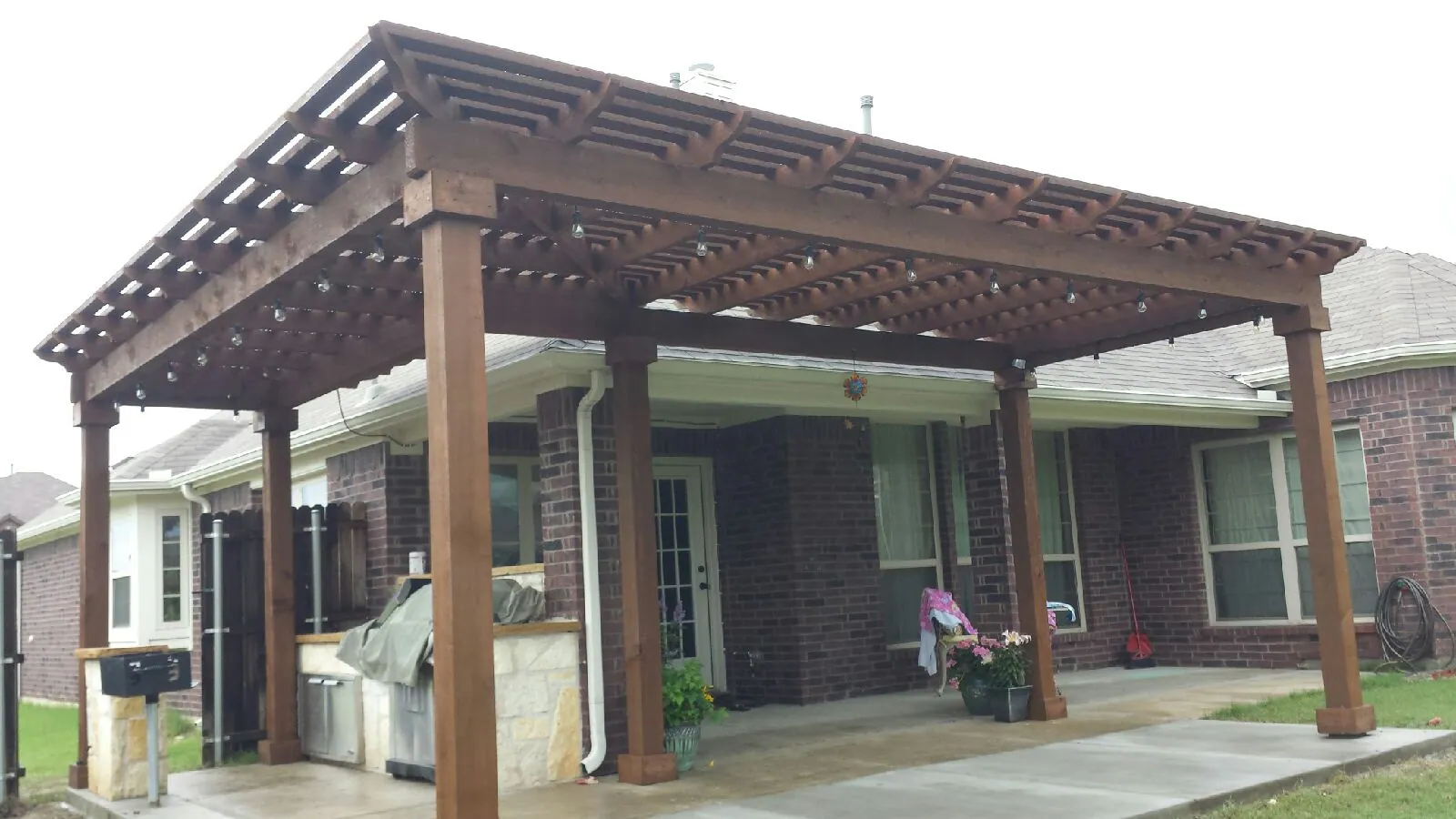
Rafter and slat spacing controls how much sun comes through — more shade over a dining area, more light over a planting bed.
Attached or freestanding
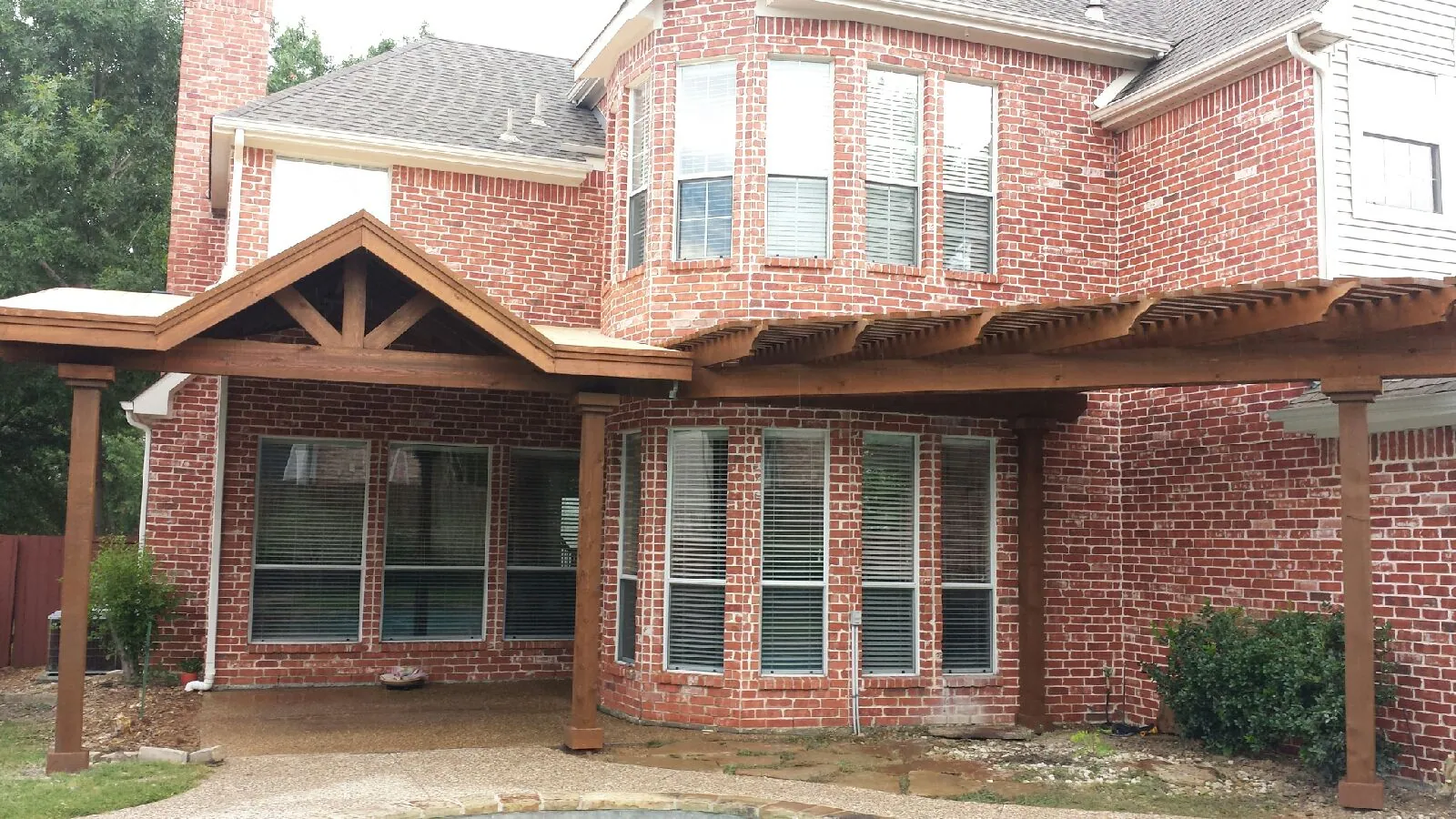
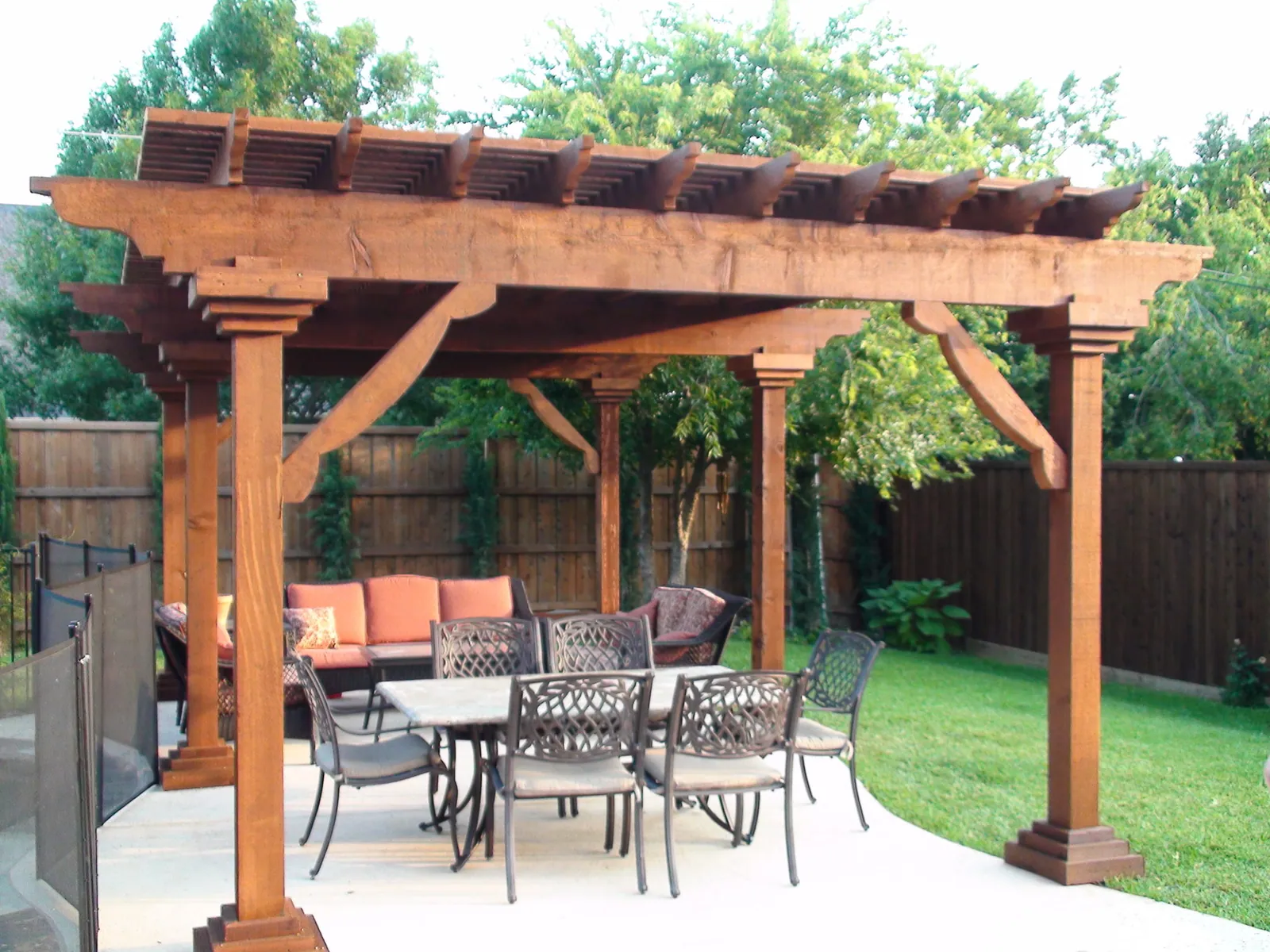
Pergolas can tie into the house over a patio or stand alone as a destination in the yard.
Materials & options
- Western red cedar posts and beams
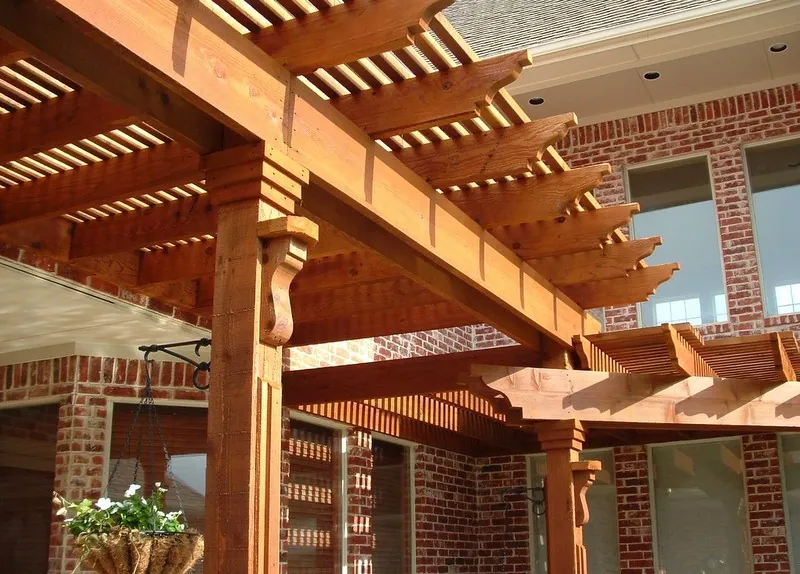
- Decorative rafter tails
- Corbels and brackets
- Arched or straight headers
- Lattice tops
- Stain and sealer finishes
- Post bases and concrete footings
- Integrated seating and planter details
What affects cost
- Overall footprint and height
- Post and beam sizing
- Attached vs. freestanding
- Rafter spacing and lattice detail
- Decorative elements: arches, corbels, rafter tails
- Footing requirements and site access
- Stain finish
- Any integrated lighting, fans or electrical
Texas weather
An open-rafter structure has to be engineered for wind uplift as well as its own weight, which is what North Texas spring storms test. Post footings, hardware and beam connections do that work. Sun is the other factor: an unstained cedar pergola will silver quickly under Texas UV, so finish selection matters if you want to keep the warm color.
Maintenance
Re-stain every two to four years depending on exposure. Inspect post bases where they meet concrete or soil, keep leaves out of the rafter joints, and tighten hardware after the first season as the wood dries and settles.
FAQ
Common questions
- What is the difference between an arbor and a pergola?
- An arbor is generally a smaller structure that frames an entry, a bench or a walkway. A pergola is larger, covers a usable area such as a patio, and is supported on multiple posts or attached to the house.
- How much shade does a pergola give?
- That is a design choice. Tighter rafter and slat spacing gives deeper shade; wider spacing gives dappled light. If you want full shade and rain protection, a solid patio cover is the better structure.
- Can a pergola attach to my house?
- Yes. Attached pergolas tie into the structure at the ledger and are supported on posts at the outer edge. The connection detail is what keeps water out of the wall, so it is done carefully.
- Do I need a permit?
- Many North Texas cities require a permit for a permanent structure, and most HOAs require approval. We will tell you what your project needs.
- Can you add lighting or a fan?
- Yes. Beam and rafter layout can be planned around lighting, fans or a heater, but it is far easier to plan for it at design time than to add it later.
Recent work
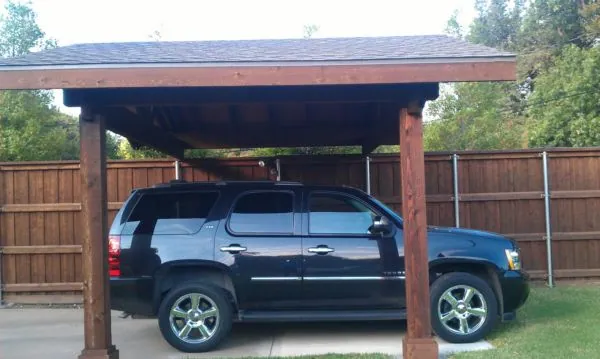
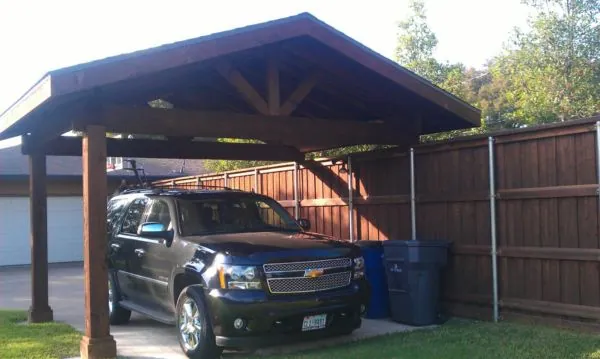
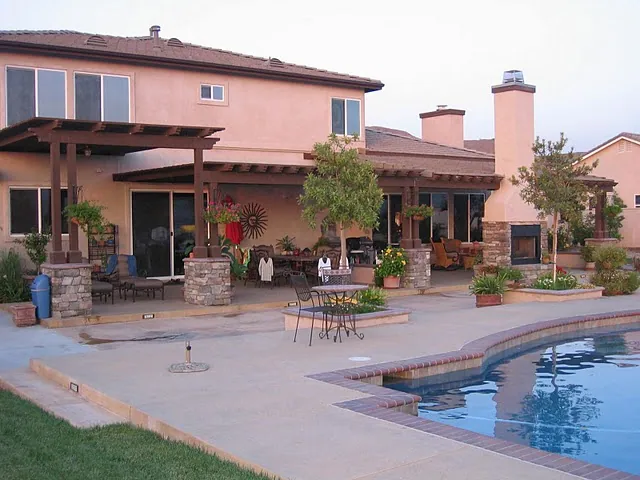
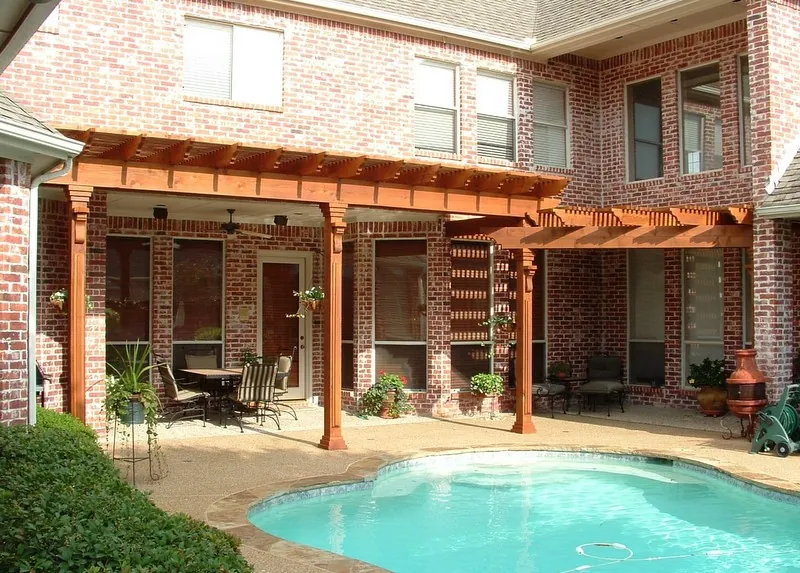
Arbor & Pergola Installation projects
Keep exploring
Related services
Ready to start your project?
Free design and estimate consultation across the Dallas–Fort Worth area. No haggle pricing, no bait and switch.